

The foldable smartphone market has evolved from an experimental testing ground into a battleground where manufacturers showcase their greatest prowess in hardware engineering. Within this category, the Vivo X Fold series has captured the attention of analysts and enthusiasts worldwide by posing a direct challenge to traditional industry leaders such as Samsung and Google.
Historically, buying a clamshell-style foldable phone meant accepting a series of significant compromises: stripped-down or mid-range camera modules, pronounced creases on the inner display, lower-capacity batteries, and structures that were vulnerable to impact or dust. The Vivo X Fold was launched with the explicit promise of eliminating those compromises, combining a flagship-level camera system developed in partnership with the legendary optics firm Zeiss, a high-precision waterdrop-shaped hinge mechanism, and unrestricted processing performance powered by Qualcomm.
Throughout this in-depth technical analysis, we will evaluate each key component of the device, its ergonomic performance in everyday use, its hardware performance, industry reviews, and the final verdict on its value proposition.
1. Hardware Design and Hinge Engineering
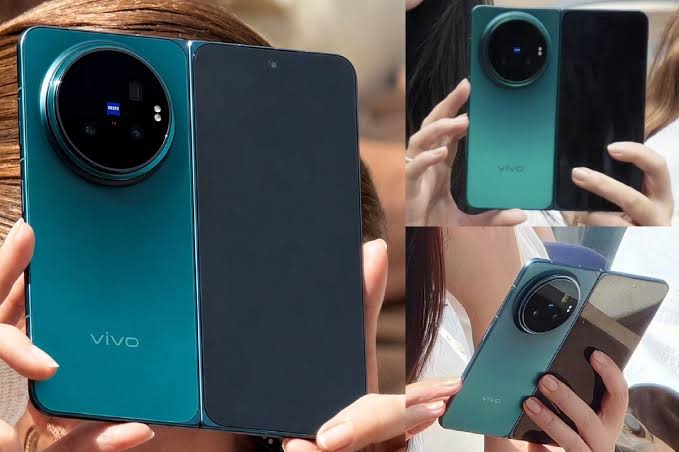
The first time you hold the Vivo X Fold, the brand's philosophy becomes immediately clear: to build a rugged, premium device where durability is not an afterthought.
A. The Waterdrop Hinge
The heart of any foldable device is its hinge. To solve the long-standing problem of visible creases and panel wear, Vivo engineers developed a floating mechanism that uses aerospace-grade materials, including titanium and zirconium alloys and lightweight carbon fiber.
- Folding Mechanism: When the phone is closed, the flexible panel retracts inside the hinge, forming a teardrop shape. This prevents the Ultra-Thin Glass (UTG) OLED panel from bending at a sharp angle, distributing the mechanical stress over a much wider surface area.
- Symmetrical closure: Unlike Samsung’s first-generation foldable phones, which left a visible gap between the panels, the Vivo X Fold folds completely flat. This not only improves the visual appeal but also prevents small objects such as coins, keys, or lint from getting inside and scratching the flexible display.
- Nearly invisible fold: In everyday use, the central crease is practically imperceptible to the touch and to the eye when the screen is on and viewed head-on, clearly outperforming competitors such as the Google Pixel Fold or previous versions of the Galaxy Z Fold.
B. Weight and Ergonomics
Weighing around 311 grams (depending on whether the back is made of vegan leather or glass), the Vivo X Fold is not a lightweight device. When closed, it’s 14.6 mm thick, which feels substantial in your pocket. However, this weight is justified by the inclusion of components that other manufacturers omit, such as dual ultrasonic fingerprint sensors (one on the outer screen and one on the inner screen), a larger battery, and a more extensive vapor chamber cooling system.
2. Display Experience: Outdoor and Indoor—No Compromises
One of the device's greatest ergonomic strengths is the aspect ratio of its two screens.
A. External Display: The Traditional Smartphone Experience
Many foldable phones make the mistake of including an outer screen that is too narrow and elongated, which makes it difficult to type with two hands. Vivo equipped the outer cover with a 6.53-inch AMOLED panel with a 21:9 aspect ratio.
- Standard ratio: The front screen feels exactly like that of a traditional bar-style smartphone. You can type, reply to messages, and browse social media with complete ease without having to open the phone.
- Specifications: It offers a 120 Hz refresh rate, Full HD+ resolution, and extremely high peak brightness for reading in direct sunlight.
B. Foldable Inner Screen: Tablet Mode
When you unfold the device, you'll see an 8.03-inch LTPO OLED display with 2K resolution and an adaptive refresh rate ranging from 1 to 120 Hz.
- Visual Immersion: The nearly square aspect ratio (4:3.5) is ideal for reading documents, editing photos, working with spreadsheets, and multitasking with two apps open side by side.
- Anti-glare treatment: The screen features a special ultra-low reflectance coating that drastically reduces glare from secondary light sources indoors or in sunlight.
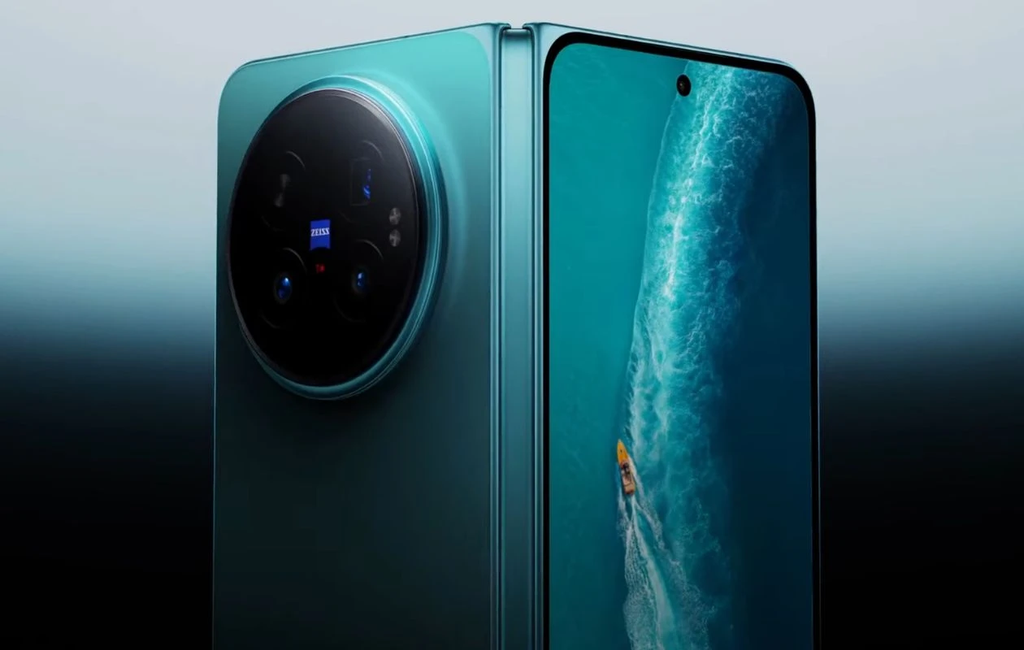
3. Camera System: The Partnership with Zeiss
While other manufacturers argue that "there isn't enough physical space" to fit top-of-the-line cameras into a foldable chassis, Vivo has integrated a four-camera rear module that directly competes with the best conventional camera phones from Apple or Sony.
A. Sensor Configuration
- Main Sensor: 50 MP with optical image stabilization (OIS) and a large Sony sensor, which captures exceptional dynamic range and delivers outstanding performance in night photography.
- Ultra-Wide Angle: 48 MP with a 114-degree field of view, ideal for landscapes and architecture, with automatic edge distortion correction.
- Portrait Telephoto Lens: 12 MP with 2x optical zoom (47 mm equivalent focal length), perfect for portraits with a natural background blur.
- Periscope Telephoto Lens: 8 MP with 5x optical zoom and up to 60x digital zoom, supported by OIS optical image stabilization.
B. Zeiss
- T* Coating:* The rear lenses feature Zeiss T* anti-reflective coating, which eliminates flare when photographing direct light sources at night.
- Zeiss Natural Color: In addition to the vivid color profile processed by the phone's software, it includes a "Zeiss Natural Color" mode that processes images so that skin tones, vegetation, and the sky accurately reflect what the human eye sees, without artificial oversaturation.
4. Performance, Processing, and Battery Life
Under the hood, the Vivo X Fold is designed as a mobile workstation.
A. Processing and Thermal Power
The device features Qualcomm's flagship processors (Snapdragon 8 series) paired with 12 GB of LPDDR5 RAM and fast UFS 3.1 or UFS 4.0 storage.
- Smooth multitasking: The phone can keep up to four apps active simultaneously on the inner screen (two in split-screen mode and two in floating windows) without any stuttering in the animations.
- Thermal Management: To control temperatures, it features a copper vapor chamber heat dissipation structure that covers the hinge and the motherboard. Although the device gets warm after long sessions of demanding games like Genshin Impact or 4K video export, performance does not suffer drastic drops due to thermal throttling.
B. Battery and Ultra-Fast Charging
- Capacity: It features a dual-cell battery system with a total capacity of 4,600 mAh (or up to 4,800 mAh in later models such as the X Fold+).
- Charging Speed: Supports 66W or 80W (depending on the version) FlashCharge wired fast charging, capable of charging the device from 0 to 100% in about 35 minutes. It also includes 50W fast wireless charging, an area where it far outperforms competitors like Samsung and Apple.
5. Reviews and Comments from Industry Experts: Pros and Cons
The launch of the Vivo X Fold and subsequent reviews of the device on the global market sparked a wide range of opinions in the world's leading technology media outlets.
A. Positive Reviews (Praise for the Hardware and Optics)
- TechRadar Review: In the review conducted by TechRadar's analysts, the publication strongly praised Vivo's decision not to compromise on camera performance: "The Vivo X Fold proves that a foldable design doesn't have to mean compromising on photography. Its four-sensor camera system, fine-tuned by Zeiss, easily outperforms the cameras on other foldables on the market, offering true versatility from wide-angle to periscope zoom."
- GSMArena Review: In its comprehensive technical review, the leading tech website GSMArena highlighted the quality of the physical mechanism and the biometric integration: "The inclusion of two ultrasonic fingerprint readers under the display is a marvel of engineering. They work quickly, are ridiculously accurate, and put the Vivo X Fold a step ahead of any other foldable that still uses side-mounted fingerprint sensors on the power button."
- Comments from Digital Trends: For its part, Digital Trends gave the external display a very positive review: "The Vivo X Fold's front display is the best of any foldable to date. Its standard aspect ratio makes the phone fully functional when closed, eliminating the constant need to unfold it for short, everyday tasks."
B. Negative Opinions (Criticism of the Software and Availability)
- Android: In its in-depth review, the Android Central team highlighted the device’s weight issues and the software experience outside of China: “The hardware is undeniably impressive, but at over 300 grams, it’s a heavy brick to use with one hand for extended periods. Furthermore, the FunTouch OS customization layer (or OriginOS in China) still lags behind the refined multitasking experience offered by Samsung’s One UI.”.
- Android Authority: In their review, the editors at Android Authority pointed to the lack of official availability in several Western markets as a critical drawback: "It's a shame that such superb hardware has such limited global distribution." Importing a Vivo X Fold means dealing with mobile network bands that aren’t optimized for all countries, complex international warranties, and software that requires manual adjustments to properly handle background notifications from popular messaging apps in the West.”.
- Comments on Environmental Protection (The Verge): Publications such as The Verge have pointed out in various analyses of Asian foldable phones that the lack of formal IPX8 water and dust resistance certification (something Samsung has managed to standardize) leaves users feeling vulnerable to accidental splashes or use in the rain.
6. Comparison Chart: Vivo X Fold vs. Direct Competitors
| Feature | Vivo X Fold | Samsung Galaxy Z Fold | Google Pixel Fold |
| Hinge and Fold | Waterdrop (Almost imperceptible fold) | U-Shape (Moderate crease) | Water drop (Visible crease) |
| Telephoto Camera | 5x Periscope + 2x Portrait Lens | 3x Optics | 5x Periscope Lens |
| Optical Coating | Zeiss T* (Anti-reflective) | Standard | Standard |
| Biometrics | Dual ultrasonic in-display sensor | Physical side sensor | Physical side sensor |
| Charging Speed | 66W / 80W wired + 50W wireless | 25W wired + 15W wireless | 30W wired + 7.5W wireless |
| External Display | 21:9 (Feels like a regular phone) |
5. Conclusions and the Future of Foldable Mobile Devices
The development and commercialization of devices such as the Vivo X Fold confirm that the mobile phone industry has moved beyond the experimental phase of foldable phones and entered a period of technical maturity and aesthetic refinement. Although significant challenges remain regarding the global optimization of adaptive software and geographic accessibility, the integration of high-precision hinges, displays with virtually no crease marks, and advanced optical systems developed in collaboration with Zeiss demonstrates that hardware innovation remains an unstoppable driver of digital transformation.
For technology professionals, content creators, and industry enthusiasts, closely following these evolutionary leaps provides insight into where personal computing and multimedia interaction are headed in the coming decade.
Are you interested in learning more about digital strategy, device technology, and advanced hardware analysis?
I invite you to leave your comments at the end of this article to share your thoughts with the community and to subscribe to our newsletter to receive our upcoming posts directly in your inbox.
Leave a Reply