
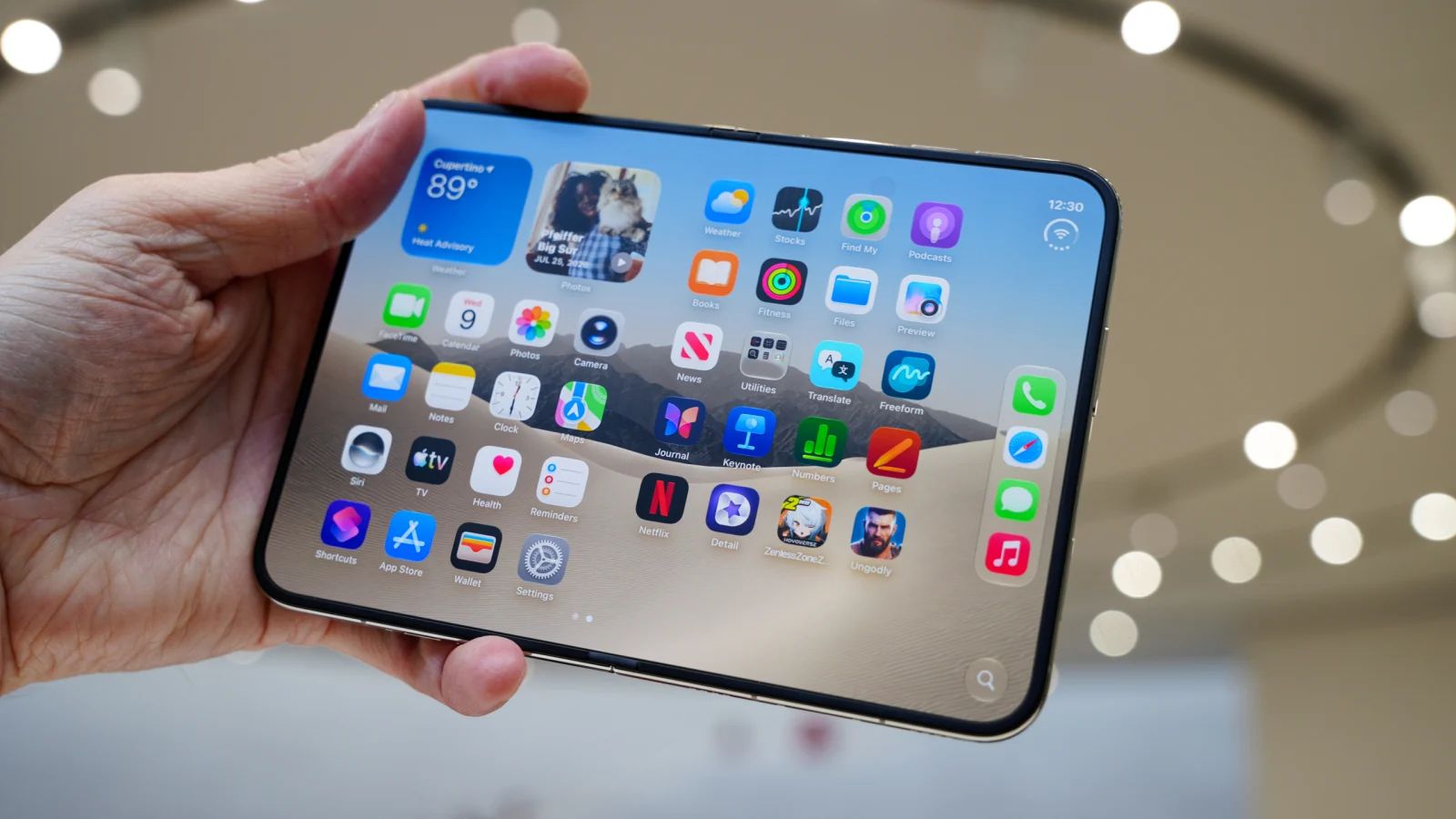
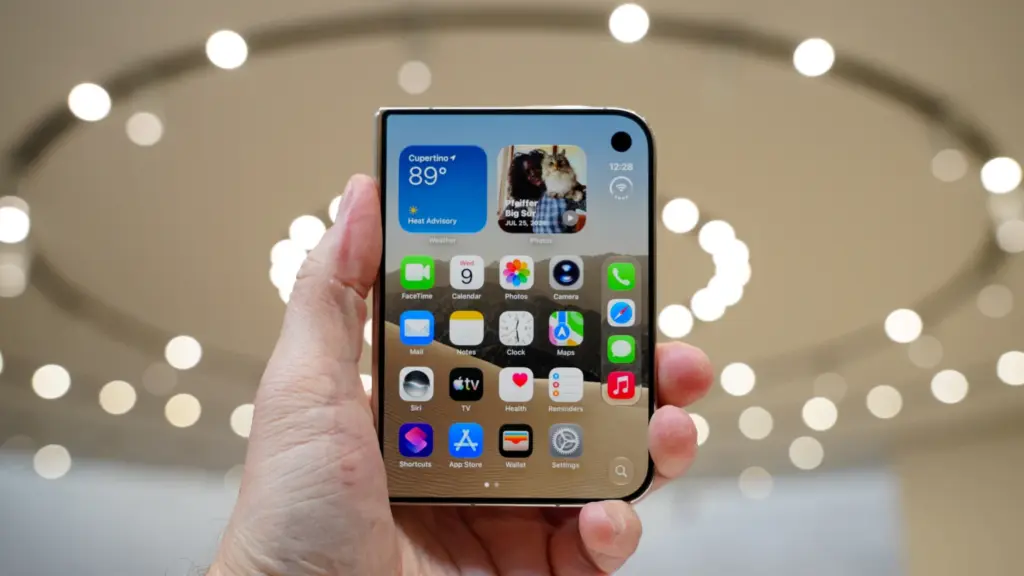
Apple’s entry into the foldable technology market with the launch of the iPhone Duo has been one of the most disruptive and talked-about events in the consumer electronics industry. By offering a form factor that combines a compact 5.4-inch external display with a 7.6-inch flexible, tablet-style internal panel, the device has generated massive interest, selling out its initial stock in a matter of minutes in multiple regions around the world.
However, as has historically been the case with the first generations of foldable devices in the tech ecosystem, the device’s arrival in the hands of early adopters has not been without setbacks. Several buyers and analysts have begun to document critical issues related to mechanical and structural failures in the inner panel, sparking an intense technical debate about the current limits of flexible display engineering.
Throughout this comprehensive analysis, we will examine recent hardware reports, the hypotheses put forward by experts in repair and component analysis, Apple’s institutional response, and the operational challenges facing this new product category.
1. The First Reports of Failures: Cracks in the Fold and Mechanical Noise
Just a few days after its official release, a large number of users in various global markets began reporting serious issues with the iPhone Duo's internal flexible display through specialized forums and the media.
- The "crunch" and central crack phenomenon: Numerous owners reported that, when attempting to open the device as usual, they heard a sharp mechanical sound or a "crunch" coming from the hinge area. Seconds later, users noticed the appearance of a vertical line of dead pixels, white spots, or a complete physical crack along the center crease, rendering the inner screen completely unusable.
- Variability in failure times: Reports indicate that incidents do not follow a pattern of gradual wear and tear; in some cases, problems arose during the first few hours of use or even during the initial setup of the device.
2. Technical Hypotheses and Expert Analysis of the Hinge Mechanism
The discovery of these defects in an ultra-high-end product immediately caught the attention of hardware engineers, market analysts, and technical review platforms, who sought to determine the source of the mechanical problem.
iFixit's Analysis and Mechanical Stress: The well-known hardware teardown and analysis platform iFixit released a preliminary report noting that the fractures in the inner panel are likely linked to critical mechanical tolerances in the hinge system. According to their hypotheses based on the device’s architecture, an internal support bar or a hinge component that experiences a micro-jam or fails to slide absolutely smoothly can exert excessive localized pressure on the back of the ultra-thin-thin layers of flexible glass, causing them to shatter instantly when the device is opened or closed.
Perspectives from the tech community: Various technology experts noted that problems with hinges and folds have been the Achilles’ heel of the foldable device industry since its inception in 2019. However,it has been positively noted that the use of textured (nano-texture) screen finishes has remarkably reduced the visual visibility of the fold under normal lighting conditions, which makes the mechanical flaw stand out even more as a challenge of physical durability rather than optical perception.
Additional comments from Ming-Chi Kuo (Supply Chain Analyst): In his recent notes to investors, Kuo noted that the main bottleneck in the iPhone Duo’s manufacturing yield rate lies in the millimeter-level precision required to assemble the titanium micro-hinges. According to his sources in the Asian supply chain, a slight deviation in tension calibration during the factory assembly process could explain why a small percentage of devices exhibit premature structural weakness in the central folding hinge.
Analysis by Ross Young (CEO of Display Supply Chain Consultants): Based on his specialized analysis of display technology, Young noted that, while the flexible OLED panel manufactured for this device has outstanding elastic properties, the stiffness of the outer protective substrate at low ambient temperatures increases the vulnerability of the polymeric material, suggesting that external thermal factors could accelerate material fatigue during the first few weeks of intensive use.
3. Apple's Official Response and the Replacement Process
In light of the growing number of reports and media pressure regarding the reliability of the hardware, the company issued an official statement acknowledging the situation through comments to specialized media outlets such as Bloomberg:
"We are aware of an issue affecting the inner display on a small number of iPhone Duo units. If users experience problems with the display on their iPhone Duo, they should contact AppleCare to request a replacement."
The company's official stance has been to treat these incidents as isolated cases affecting a small number of devices from the initial batch, prioritizing direct assistance and the immediate replacement of the affected devices through its authorized technical support channels.
However, the global stock shortage has meant that some users have had to wait weeks to receive replacement units, highlighting the logistical challenges of manufacturing such a specialized form factor.
4. Ergonomic and Software Challenges in the First Generation
Beyond hardware reports and cracked screens, long-term usage analyses have highlighted other operational challenges inherent in the iPhone Duo's design:
- Optimization of Third-Party Apps: Although Apple has previously designed tools for developers, a large number of social media apps, financial platforms, and productivity tools still lack native support for the dual aspect ratio, forcing the system to display black sidebars or fragmented interfaces.
- Ergonomics and weight: Because it is quite heavy when closed and features an asymmetrical design in its camera module and outer display, users have noted that the device requires a significant adjustment period to use with one hand.
5. Conclusions
The launch of the iPhone Duo demonstrates that, despite notable advances in reducing the visible crease and improving the quality of construction materials, the engineering of foldable devices continues to face monumental challenges in terms of long-term mechanical durability. How effectively Apple handles warranty replacements and resolves issues with its hinge’s tolerances will determine whether this product line ultimately establishes itself in the high-end market.
Are you interested in learning more about technology, hardware engineering, and digital strategy?
If you found this analysis of the iPhone Duo, the reports of mechanical failures, and the experts' insights helpful, we invite you to join our exclusive community on Telegram, where we share technical discussions, reviews of new releases, and real-time updates on the tech ecosystem.
- 👉 Join our official Telegram channel to be part of the conversation and get direct access to specialized content.
Leave a Reply